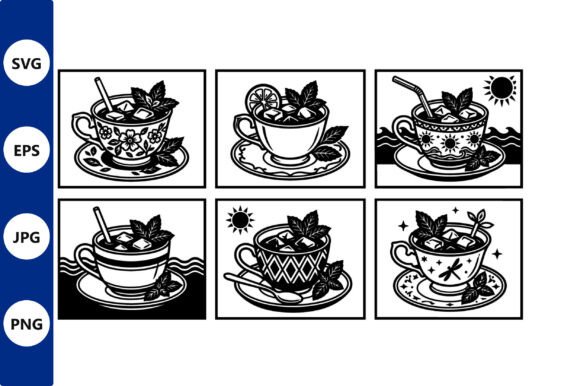
Black and White Tea Cup Vector Collage Review
As a designer who spends more time staring at stitch charts than sleeping, I approach every new embroidery file with a mix of hope and skepticism. The market is flooded with generic clipart, so finding a piece that actually translates well from screen to fabric is rare. Today, I am putting the Black and White Tea Cup Vector Collage under the microscope. This isn’t just about how pretty it looks in a preview window; it is about whether this machine embroidery design can survive the real world of custom apparel, boutique merchandise, and high-stakes client projects.
The source material falls squarely into the Illustrations and Graphics categories, featuring a grid layout of teacups adorned with floral motifs, mint leaves, and ice. It utilizes a clean line art style with classic ornamental details and balanced negative space. On paper—or rather, on the vector canvas—it is charming. But does it hold up when the needle starts moving?
First Impressions: Mood and Visual Personality
When I first loaded the file into my digitizing software, the immediate takeaway was its crisp, editorial aesthetic. The black and white palette creates a sophisticated, minimalist mood that feels very current. It avoids the cluttered look of older, overly detailed tea-themed designs. Instead, it leans into modern graphic design principles, which is a huge plus for today’s consumer who favors clean lines over fussy complexity.
The inclusion of specific elements like mint leaves and ice cubes adds a refreshing visual weight to the composition. It suggests a cool, calming vibe—perfect for spring or summer collections. However, because it is a grid-based collage, the visual personality is structured and repetitive. This makes it excellent for creating patterns or all-over prints, but it requires careful placement if you want it to serve as a focal point on a garment.
Real-World Application: Where Does It Shine?
I decided to test the versatility of this digital embroidery file by imagining several common use cases for Etsy sellers and small shop products. Here is where I see the Black and White Tea Cup Vector Collage performing best:
- Tote Bag Design: This is perhaps the strongest candidate. A grid pattern of teacups on a sturdy canvas tote bag screams "coffee lover" or "tea enthusiast." The black and white contrast pops beautifully against natural beige or stark white cotton bags. It works as a large central panel or as an all-over print effect if the hoop size allows.
- Sweatshirt Embroidery: For a cozy, oversized sweatshirt, this design offers a subtle nod to comfort culture. Placed on the chest or across the back, the clean line art style prevents the garment from looking dated. It appeals to the demographic that appreciates aesthetic minimalism.
- Kitchen Towels and Aprons: In the realm of home decor, this design fits seamlessly. The theme of tea and refreshment aligns perfectly with kitchen aesthetics. When stitched onto linen or cotton blends, the running stitch outlines (if used) can mimic the texture of woven fabric, adding a tactile layer to the handmade product.
- Baby Embroidery: While the subject matter is adult-oriented, the simplicity of the line art makes it suitable for nursery decor or baby blankets. The soft, non-aggressive shapes are gentle on the eyes, making it a safe choice for personalized gift items for baby showers.
Technical Challenges and Fabric Considerations
No design is perfect, and this one has specific areas where a craft business owner needs to be cautious. The primary challenge lies in the level of detail inherent in a "clean line art" style. Line art relies heavily on thin, continuous strokes to define shape. In embroidery, these must often be converted to running stitch or narrow satin stitches.
If the stitch density is too low, the lines may appear broken or jagged on textured fabrics. Conversely, if the digitizer increases the density to ensure solidity, the fabric may pucker, especially on lightweight materials. I strongly advise testing this design on scrap fabric before committing to expensive inventory. Pay close attention to how the thread colors interact with the fabric texture. On dark fabrics, you will need a heavy underlay or a contrasting thread color to make the black lines visible, which might alter the intended monochromatic look.
Another critical factor is the hoop size. Because this is a grid collage, it likely requires a larger hoop to capture the full composition without excessive stitching that could distort the individual cup shapes. If you are working with smaller hoops, you may need to crop the design, which could disrupt the balanced negative space that makes the original illustration so effective.
Where to Use It Carefully
There are certain surfaces where this design might struggle:
- Curved Surfaces: Attempting to embroider a rigid grid pattern onto a curved surface like a baseball cap can result in distortion. The straight lines of the cups may warp, ruining the geometric integrity of the design assets.
- Stretchy Fabrics: Without proper stabilization, knit fabrics can cause the fine lines of the tea cups to waver or break during the stitching process. A cut-away stabilizer is essential here.
- Small Hoop Sizes: As mentioned, tiny hoops may not accommodate the intricate details of the floral motifs and mint leaves. These small elements can become muddy blobs if the resolution is too low.
Stitching Strategy and Thread Selection
To get the most out of this embroidery project, your thread selection is paramount. Since the source is black and white, you have two main paths: pure monochrome or strategic color blocking.
If you stick to monochrome, consider using a high-quality polyester thread in true black and bright white. Avoid off-whites unless you are aiming for a vintage aesthetic, as they can clash with the crispness of the line art. For a more dynamic look, you might introduce a single accent color, such as a deep forest green for the mint leaves, while keeping the cups themselves black and white. This draws the eye and adds depth without overwhelming the design.
Check the satin stitch coverage carefully. If the handles of the teacups or the rims are defined by satin stitches, ensure they are wide enough to be stable but not so wide that they lose their delicate appearance. A good rule of thumb is to keep satin stitches narrow for fine details and reserve wider fills for background elements.
Commercial Viability and Brand Consistency
For commercial embroidery and printable mockup creation, this design offers strong branding potential. Its clean, graphic nature makes it highly recognizable. Customers scanning through an Etsy listing or a craft fair table are drawn to designs that look professional and intentional. The Black and White Tea Cup Vector Collage delivers exactly that: a polished, gallery-worthy aesthetic.
It also lends itself well to bundling. You could offer a matching set of embroidered coasters, a tea towel, and a tote bag, all featuring variations of this grid pattern. This consistency builds brand trust and encourages customers to buy multiple items. Furthermore, the theme is evergreen. Unlike seasonal trends that fade quickly, the appreciation for tea and coffee is constant, ensuring your finished product remains relevant year-round.
Final Verdict
The Black and White Tea Cup Vector Collage is a solid, versatile addition to any designer’s library. It succeeds because it respects the limitations of embroidery while maximizing the strengths of digital illustration. It is not a complex, multi-layered masterpiece that demands hours of setup, but rather a smart, efficient design that yields high visual impact with manageable production time.
Before purchasing or downloading, always confirm the licensing terms. Ensure you have the right to sell finished goods, especially if you are targeting mass production. Test the file in your specific machine environment, check the stabilizer requirements, and verify that the thread colors available in your stash match the design’s needs. If you do your homework, this design can easily become a bestseller in your custom apparel or home decor collection.