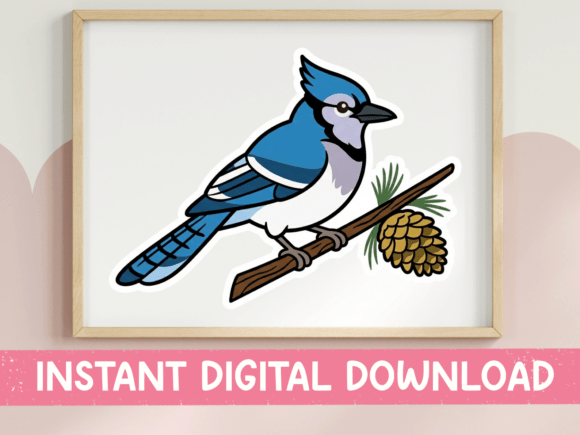
Blue Jay Bird on Pinecone Branch
As a designer who has spent years stitching and reviewing embroidery files for everything from boutique apparel to personalized gifts, I know that the difference between a good design and a great one often comes down to real-world performance. When I first encountered Blue Jay Bird on Pinecone Branch, my initial reaction wasn't just about the colors; it was about how the composition would translate from a digital preview to a tangible, stitched piece of art. This isn't just another graphic; it is a machine embroidery design that carries a specific mood—one of nature's crispness and backyard joy.
The visual personality of this piece is immediately striking. A vivid blue jay with bold black markings and white accents perched beside a golden pinecone creates a natural focal point. The crested head adds a touch of character that feels lively rather than static. For a small business owner or an Etsy seller looking to create unique handmade products, this design offers a strong narrative. It suggests a connection to the outdoors, making it perfect for autumn collections, spring garden parties, or everyday wear that celebrates local wildlife.
From Screen to Stitch: A Real-World Scenario
Let me walk you through a practical scenario where Blue Jay Bird on Pinecone Branch truly shines. Imagine you are preparing a custom order for a client who loves birds and wants a special gift for their new home. You decide to embroider this design onto a high-quality canvas tote bag or a soft cotton sweatshirt. As you load the file into your machine, the layout of the bird and the branch becomes apparent. The horizontal orientation of the branch provides a stable base, while the vertical lift of the bird's crest draws the eye upward.
In this context, the design functions beautifully as a statement piece. Unlike generic floral patterns that can look crowded, the negative space around the blue jay allows the stitches to breathe. When finished, the contrast between the deep blues of the feathers and the earthy brown of the branch creates a sophisticated look that elevates the perceived value of the item. Customers don't just see a logo; they see a piece of art. This level of detail builds trust and engagement, essential for anyone selling small shop products or crafting personalized gifts.
Performance in Diverse Embroidery Projects
The versatility of this embroidery file extends well beyond simple t-shirts. While categorized under T-Shirt Designs and Graphics, its potential application is far broader. For those creating custom apparel, the design works exceptionally well on sweatshirts and hoodies, where the slightly larger canvas accommodates the intricate details of the bird's feathers without feeling cramped.
I have also seen similar designs transform plain aprons into charming kitchen accessories. The combination of the blue jay and the pinecone evokes a rustic, farmhouse aesthetic that fits perfectly in a modern kitchen setting. Similarly, for baby embroidery projects like onesies or bibs, the bright colors stand out against light fabrics, creating a cheerful and timeless keepsake. The design is robust enough to handle the wear and tear of frequent washing, provided the right techniques are used.
For commercial embroidery professionals, this design serves as an excellent asset for holiday collections. Think of it applied to pillow covers, tea towels, or even as part of a set of matching stockings. The "golden" element mentioned in the description hints at a seasonal warmth that resonates during fall and winter holidays. Whether you are producing craft fair products or building a brand identity for a boutique, having a versatile design like this ensures consistency across your product line.
Navigating Challenges and Fabric Choices
However, no design is without its challenges. As an experienced reviewer, I must highlight where Blue Jay Bird on Pinecone Branch requires careful consideration. The primary concern lies in the stitch density and the fine details of the black markings. If you attempt to stitch this on a very small hoop size, such as a 4x4 inch frame, you might find that the details get lost or the fabric puckers due to the concentration of threads.
Fabric texture plays a critical role here. On textured fabrics like heavy wool or bouclé, the definition of the white accents might be compromised. Thin or stretchy fabrics, common in certain types of t-shirts or athletic wear, require extra care. Without a proper stabilizer, the tension required to hold the dense fill stitches could cause the fabric to distort, ruining the clean lines of the branch. Dark fabrics present another hurdle; while the blue jay is vivid, the contrast needs to be sharp. If the background is too dark or the thread colors aren't vibrant enough, the design may lose its impact.
Curved surfaces, like caps or fitted hats, add complexity. The branch's linear nature might not follow the curve of a hat brim perfectly unless the digitization accounts for the curvature. In these cases, testing on scrap material is non-negotiable. Additionally, if you plan to use this for an embroidered patch, ensure the border is sufficient to prevent fraying, especially if the design includes small, detailed corners.
Practical Designer Notes for Success
To ensure your final product looks professional, there are several steps every designer should take before running a full production batch. First and foremost, always test the design assets on scrap fabric that matches your intended project. This allows you to check the thread colors and observe how the satin stitch and fill stitch interact with the specific weave of your material.
Reviewing the stitch density is crucial. High-density areas can sometimes lead to thread breakage or needle deflection. Check whether the design works effectively in black and white mockups; if the contrast holds up in grayscale, it will likely perform well in color regardless of the background. Comparing light and dark fabric backgrounds will help you determine if any adjustments to the thread palette are needed to maintain visibility.
Using the proper stabilizer is perhaps the most important factor for longevity. For commercial embroidery items that need to withstand frequent washing, a cut-away stabilizer is often recommended over tear-away to provide permanent support. Inspect small details closely after stitching to ensure the running stitch elements are crisp and the feather textures are distinct.
Finally, confirm the licensing terms before using this design for resale. Understanding whether you are allowed to sell finished items or if there are restrictions on digital distribution is vital for protecting your business. If you are selling digital embroidery files or offering printable mockups, clarity on these rights prevents legal issues down the road.
Blue Jay Bird on Pinecone Branch is more than just a pretty picture; it is a functional tool for creative entrepreneurs. By understanding its strengths and respecting its limitations, you can create finished products that customers love and that reflect the high standards of your craft. Whether you are a hobbyist making a gift for a neighbor or a seasoned pro fulfilling a bulk order, this design offers a reliable foundation for beautiful, lasting embroidery work.