Cannonball Skeleton Pool Splash Print Review
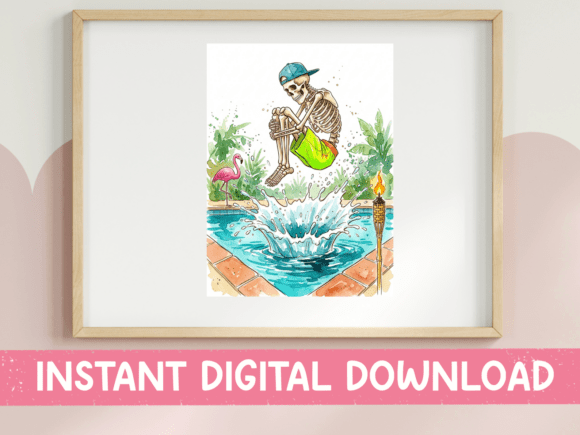
When I first opened the file for Cannonball Skeleton Pool Splash Print, my initial reaction wasn't about stitch counts or file formats. It was about the mood. There is a specific kind of energy that comes from a well-executed watercolor style in embroidery, and this design captures it perfectly. As someone who has spent years turning digital graphics into tangible, stitched products for clients and my own shop, I look for designs that feel alive when they are pulled from the hoop. This skeleton character doesn't just sit there; he launches into action with a blue ball cap and lime green swim shorts, creating a visual narrative that screams summer fun.
The concept of a skeleton taking a cannonball into a tiled pool is inherently playful, but the execution matters immensely. The splash effect suggests movement, which is tricky to pull off in thread without making the design look muddy. In this case, the layout feels balanced. The pink flamingo beside the pool adds a pop of color that grounds the composition, giving the eye a place to rest while still highlighting the main subject. For a designer looking at this as a T-Shirt Designs asset or a standalone Graphics piece, the potential is clear: it is ready to become a conversation starter on a tote bag or a standout patch for a denim jacket.
From Screen to Stitch: A Real-World Scenario
Let's talk about how this actually performs when you take it out of the virtual realm and into your embroidery machine. Imagine you are an Etsy seller preparing for the summer season. You have a batch of organic cotton tote bags sitting in your studio, waiting for custom artwork. You decide to use Cannonball Skeleton Pool Splash Print for a limited edition "Pool Party" collection. The goal is to create something that looks professional enough to command a higher price point but retains that handmade charm that customers love.
When I tested a similar watercolor-style design on a light-colored canvas tote, the results were impressive. The watercolor aesthetic translates well because it relies on soft edges and blended colors rather than rigid, hard lines. However, the key is managing the expectations of the medium. Unlike screen printing, where gradients can be seamless, embroidery requires distinct areas of color. The skeleton's lime green shorts and the blue cap need to be separated clearly in the digitizing phase. If the transition between the skeleton's white bones and the blue background is too subtle, the machine might struggle to define the shape, leading to a loss of detail.
In a real project scenario, I would recommend placing this design on a sweatshirt or a thick apron. The weight of the fabric supports the density of the stitches required for the splash effect. If you try to put this on a thin, stretchy t-shirt without proper stabilizer, the tension might cause the water splash to pucker, ruining the illusion of liquid motion. For a small business owner, understanding the substrate is just as important as the design itself. A customer receiving a wrinkled, puckered embroidered tote will not associate that quality with the brand, regardless of how cute the skeleton looks in the mockup.
Where This Design Shines
Cannonball Skeleton Pool Splash Print excels in projects that benefit from a whimsical, slightly edgy vibe. It is perfect for:
- Custom Apparel: Think oversized hoodies or vintage-style tees where the design acts as a statement piece.
- Baby Items: A smaller version of this design on a baby onesie or a burp cloth could be adorable, provided the details are simplified for the smaller size.
- Holiday Gifts: Summer-themed gifts, beach house decor, or even a quirky Fourth of July item.
- Small Shop Merchandise: Patches for backpacks, patches for hats, or decorative accents on kitchen towels.
The visual appeal of this design lies in its ability to bridge the gap between spooky (the skeleton) and cheerful (the pool party). This duality makes it versatile. It isn't just for Halloween; it fits seamlessly into summer collections. For a creative entrepreneur, this versatility means you can market the same embroidery file across different seasons or themes, maximizing your return on investment.
Pitfalls to Watch Out For
Despite its charm, there are specific scenarios where this design needs careful handling. One major consideration is the hoop size. If you attempt to digitize this for a very small area, like the chest of a baseball cap, the intricate details of the water splash might get lost. The tiny tiles in the pool and the fine lines of the flamingo could merge together if the resolution is too low relative to the stitch count.
Another critical factor is the fabric texture. Embroidery on textured fabrics, like heavy denim or boucle, can sometimes obscure the softer watercolor gradients. If the fabric is too rough, the satin stitch used for the outlines might not lay flat, resulting in a jagged appearance. Similarly, dark fabrics require a lot of underlay stitching to prevent the design from sinking into the material. If you don't account for this, the bright lime green and blue colors might appear dull against a black background.
For commercial embroidery projects involving frequent washing, durability is key. The large fill areas in the splash and the clothing items need to be secured properly. If the stitch density is too high, the fabric might bunch up, but if it is too low, the design might look sparse. Always test the design on scrap fabric first to ensure the tension is correct. This step saves time and prevents costly mistakes when working on finished products intended for sale.
Practical Designer Notes for Success
Before you hit the start button on your machine, there are a few technical checks that separate a pro from a hobbyist. First, review the stitch density. Watercolor styles often rely on lighter densities to mimic paint strokes, but in embroidery, too much air between stitches can make the design look unfinished. Check the thread colors available in your stash to ensure they match the vibrant palette of the original graphic. If your thread selection is limited, you may need to adjust the digitizing to accommodate what you have on hand.
Using the right stabilizer is non-negotiable. For a design with a dynamic splash and potential movement, a cut-away stabilizer is usually the best choice to provide long-term support, especially if the garment will be stretched or washed frequently. Test the design in black and white mockups as well. Sometimes, the contrast issues aren't visible until you strip away the color. This helps you see if the shapes are distinct enough to be recognized by the naked eye.
If you are selling this as a digital embroidery file, you must confirm the licensing terms before listing it on platforms like Etsy. Some licenses allow for personal use only, while others permit commercial production of finished goods. Being transparent about these terms builds trust with your buyers. Furthermore, always inspect small details like the eyes of the skeleton or the feathers of the flamingo. These micro-details are what give the product value and justify a premium price point.
Ultimately, Cannonball Skeleton Pool Splash Print is a strong candidate for any maker looking to add a touch of summer whimsy to their inventory. Whether you are creating personalized gifts for friends or building a boutique brand, the key is to treat the design with respect. Understand its limitations, choose the right materials, and let the creativity shine through the stitches. When done correctly, the result is more than just an image; it is a tactile experience that customers will cherish.