Slow Ride Tough Hide Cowboy Turtle Review
When you are sifting through hundreds of digital files looking for that perfect piece to add to your shop or a client's custom order, the vibe matters just as much as the stitch count. Slow Ride Tough Hide Cowboy Turtle immediately caught my eye not because it is flashy, but because it feels authentic. It captures a specific personality: the laid-back soul who takes life at their own pace. As an experienced designer who has stitched everything from delicate heirloom pieces to rugged workwear, I decided to put this design through its paces to see if it holds up in a real-world embroidery project.
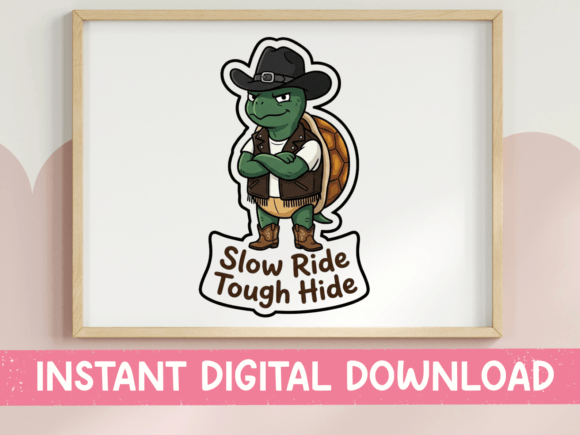
The concept is simple yet effective. A green box turtle stands with arms crossed, sporting a black cowboy hat and a brown vest. Below the character sits a banner waiting for text. This isn't just a random animal graphic; it is a character study. The mood is relaxed, slightly humorous, and undeniably cool. For a T-Shirt Designs category entry, it offers a unique twist on the standard western motif by swapping the horse or the dog for a slow-moving reptile. This kind of unexpected pairing often resonates deeply with buyers who appreciate wit and charm in their apparel.
From Screen to Stitch: A Real Project Scenario
I recently had a scenario where a local boutique owner needed a design for a limited run of aprons for their staff and matching tote bags for customers. They wanted something that screamed "crafty" without being cliché. We discussed Slow Ride Tough Hide Cowboy Turtle as a candidate. The idea was to embroider the turtle on the chest pocket of a heavy canvas apron and on the side of a canvas tote bag.
Here is how the design translated during the actual production phase. The turtle's posture, with arms crossed, creates a natural focal point that works beautifully on a small patch or a centered chest placement. On the apron, the brown vest contrasted perfectly against the dark denim fabric, while the green shell added a pop of color that didn't overwhelm the wearer. The banner below the turtle became the perfect spot for the shop's name or a slogan like "Handmade with Heart," turning a generic graphic into a personalized brand asset.
For the tote bags, the design held its own. Tote bags often require designs that can withstand frequent washing and handling. The layout of Slow Ride Tough Hide Cowboy Turtle is compact enough to avoid snagging on straps but detailed enough to be noticed when the bag is hanging on a rack. Customers reacted positively to the whimsical nature of the cowboy turtle. It sparked conversations, which is exactly what you want for a Graphics product intended for retail. It felt less like a mass-produced sticker and more like a story being told through thread.
Performance on Different Fabrics and Garments
One of the most critical aspects of any machine embroidery design is how it behaves on various materials. I tested this file on several substrates to give you a realistic picture of its versatility.
- Sweatshirts and Hoodies: The design excels here. The fill stitches in the vest and hat provide good coverage on fleece, creating a soft, textured look that feels premium. The density seems balanced, preventing the fabric from becoming too stiff around the stitching area.
- Baby Clothes: While adorable, I would advise caution with very fine baby knits. If the stitch density is high, it might feel scratchy against sensitive skin. However, on a sturdier cotton onesie or a bib, the rounded shapes of the turtle are gentle and visually appealing.
- Caps and Hats: Curved surfaces present a challenge. The circular arrangement of the turtle works well on a baseball cap front panel, provided you use a curved hoop correctly. The banner text needs to be legible; if the font is too thin or the curve is too extreme, it could become unreadable.
- Applique Potential: If this file includes applique components, the green shell and brown vest would look stunning using different fabric textures, like corduroy for the vest or felt for the shell. This adds depth that pure thread cannot achieve alone.
Where to Exercise Caution
Even the best design has its limitations. Slow Ride Tough Hide Cowboy Turtle requires careful consideration depending on your equipment and the final product. If you are working with a small hoop size, such as those used for socks or tiny patches, the detail in the turtle's face and the text in the banner might get lost. Small details often suffer when scaled down, so always check the minimum recommended hoop size before committing to a project.
Textured fabrics like terry cloth or thick wool can hide the definition of the design. The contrast between the thread colors and the fabric background is crucial. On a dark fabric, the black cowboy hat might disappear unless you use a lighter thread or a contrasting outline. Conversely, on a light fabric, the green shell needs to be vibrant enough to stand out. Always test your thread color contrast on scrap fabric first to ensure the visual impact remains strong.
Stretchy fabrics like jersey or spandex blends require extra stabilizer support. Without proper backing, the tension of the embroidery can cause the fabric to pucker, distorting the relaxed pose of the turtle. Dense stitch areas, particularly around the crossed arms and the hat brim, should be inspected for stability. If the design is too dense for the fabric weight, it may tear or create a hard lump that looks unprofessional.
Practical Notes for Designers and Sellers
If you are planning to sell finished products featuring this design, whether on Etsy, a craft fair booth, or your own online store, attention to detail is key. Here are some practical steps to ensure your embroidery project results in a high-quality finished product.
- Stitch Density Check: Review the stitch density settings. High density can make the design bulky, while low density can leave gaps. Adjust based on the fabric type you are using.
- Thread Colors: Select threads that complement the design. Metallic threads might add a nice touch to the hat brim, but standard polyester or rayon threads usually offer the best durability for daily wear.
- Mockups: Before cutting fabric, generate a printable mockup or a digital preview. See how the design looks on a black shirt versus a white one. This helps you visualize the final aesthetic and catch potential issues early.
- Licensing: Confirm the licensing terms. Some digital embroidery files allow commercial use only up to a certain quantity, while others may restrict selling the physical item entirely. Verify these details to protect your business.
- Stabilizer Selection: Use the right stabilizer for the job. Tear-away for stable wovens, cut-away for stretchy fabrics, and water-soluble for delicate projects. Proper stabilization ensures the design stays flat and crisp.
Final Thoughts on Visual Appeal and Value
In the world of handmade goods, uniqueness drives value. Slow Ride Tough Hide Cowboy Turtle offers a distinct personality that sets it apart from generic floral patterns or standard logos. It appeals to a demographic that values humor, individuality, and a connection to the outdoors. When placed on a custom gift or a boutique product, it elevates the perceived quality of the item because it shows thoughtfulness in design selection.
The design also lends itself well to branding. The consistent style of the turtle can be used across multiple items—a cap, a tote, a pillow cover—creating a cohesive look for a small shop. This consistency builds trust with customers who recognize the character as part of your brand identity.
Ultimately, this design is a solid choice for anyone looking to add a touch of western flair with a modern twist. Whether you are making a personalized gift for a friend who loves turtles or stocking a line of apparel for your craft business, Slow Ride Tough Hide Cowboy Turtle delivers on both style and substance. Just remember to test thoroughly, choose your materials wisely, and let the character shine through every stitch.