Beale Street Guitar Music Sign Review
There is a specific kind of magic that happens when you pull a file out of your digital folder and imagine it stitched onto fabric. It isn't just about the pixels; it is about how the threads will catch the light, how the texture of the material will interact with the stitches, and whether the final piece tells the story you intended. When I first laid eyes on the Beale Street Guitar Music Sign, I didn't just see a graphic; I saw a mood. The concept of an acoustic guitar resting against a glossy blue street sign immediately evokes the soulful atmosphere of Memphis nights. As someone who has spent years evaluating design assets for real-world projects, from boutique merchandise to personalized gifts, this piece struck a chord right away.
The First Impression: A Retro Soul
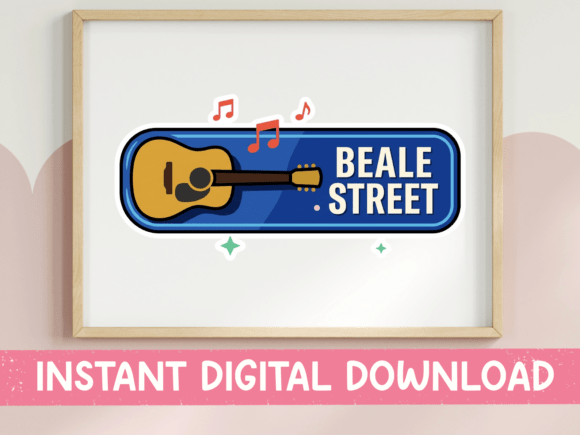
The visual personality of this design is distinctively retro. The warm wood tones of the guitar body contrast beautifully with the dark fretboard and the deep, glossy blue of the street-sign background. This color palette suggests warmth, nostalgia, and authenticity. For an embroidery designer, the layout is inviting. It doesn't scream for attention like a neon sign; instead, it whispers a story of live music and local culture. It feels like something that belongs in a coffee shop, a music venue, or a home where vinyl records are stacked high.
When considering where this fits naturally, it is clear that the Beale Street Guitar Music Sign is not a generic clipart image. It has a narrative weight. It appeals to those who carry a soft spot for the blues and the history of American music. This emotional connection is crucial when creating handmade products. Customers do not just buy a shirt; they buy into an identity. This design offers a strong foundation for that identity.
Real-World Application: From File to Finished Product
I often get asked how a design translates from a screen to a physical item. Let me walk you through a scenario I recently considered while planning a new line of custom apparel for a local music festival. Imagine preparing a custom embroidered tote bag for a customer who loves live music. The Beale Street Guitar Music Sign would be perfect here. The rectangular shape of a street sign translates well to the flat surface of a canvas tote, offering a clean, centered look that is easy to stitch without distortion.
However, let us push the boundaries further. What if we applied this to a heavy-duty sweatshirt? The design's bold lines and solid shapes would hold up well against the thick fleece. The warm wood tones of the guitar could be rendered using a mix of satin and fill stitches to simulate the grain of the instrument. But then, consider a baby onesie. While the theme is musical, the size constraints change everything. On a tiny chest area, the details of the guitar neck might become too small to read clearly after stitching. This is where practical judgment comes in. The design works best as a statement piece on larger garments or accessories, rather than a subtle detail on infant wear.
I also envision this design on a kitchen towel or a pillow cover for a musician's living space. The glossy blue of the sign would pop against white or cream linen, creating a focal point that feels both artistic and functional. For a craft business owner looking to create holiday gifts, this design offers a unique alternative to standard Christmas motifs. It captures the spirit of the holidays through the lens of music lovers, making it a thoughtful personalized gift for parents or grandparents who appreciate the arts.
Technical Considerations and Fabric Choices
As an experienced reviewer, I must address the technical realities of bringing this design to life. The success of the Beale Street Guitar Music Sign relies heavily on stitch density and thread color selection. If the wood body of the guitar is filled with too much density, the fabric may pucker, especially on thinner materials like t-shirts or lightweight polyester blends. You need to ensure that the fill stitch pattern allows the fabric to breathe.
Fabric texture plays a massive role here. On a smooth, tightly woven cotton, the definition of the fretboard and the street sign edges should be crisp. However, on a textured fabric like a boucle sweater or a rough burlap tote, some of the finer details might get lost. In such cases, you might need to simplify the digitization slightly or choose a heavier stabilizer to support the weight of the threads. Speaking of stabilizer, because this design features a mix of curves (the guitar) and straight lines (the sign), a cut-away stabilizer is likely necessary to prevent warping during the washing process.
One area to exercise caution is curved surfaces like caps. While possible, the street sign element might distort if not carefully placed on a structured front panel. The glossy blue background needs to remain flat to maintain its legibility. If you are working with dark fabrics, the thread colors must be chosen with extreme care to ensure the blue sign stands out. A light underlay might be required to make the colors pop against black denim or navy hoodies.
Visual Appeal and Brand Consistency
In the world of Etsy sellers and small shop owners, presentation is everything. A well-executed embroidery project builds trust and elevates the perceived value of your brand. The Beale Street Guitar Music Sign adds a layer of professionalism to any finished product. It looks intentional and curated, rather than mass-produced. When customers see a high-quality stitch job that captures the nuance of the guitar's wood grain, they perceive the item as premium.
This design also enhances giftability. Whether it is a wedding gift for a couple who loves music or a birthday present for a road-tripping friend, the thematic relevance makes it easier to market. It speaks directly to the recipient's interests. For commercial embroidery projects, such as uniform patches for a band or merchandise for a music store, this design offers a cohesive look that reinforces brand identity. It turns a simple logo into a piece of art.
Practical Designer Notes for Success
Before you hit the "stitch" button on your machine, there are several steps every professional should take. First, always test the design on scrap fabric. This is non-negotiable. You need to see how the threads lay down and check for any potential puckering or thread breaks. Second, review the stitch density. If the design feels too heavy, contact the creator to see if a lighter version is available, or adjust the settings on your machine to reduce the number of stitches per inch.
Check your thread color contrast meticulously. Ensure that the dark fretboard does not blend into the background if you are using a dark fabric. Also, inspect the small details. Are the tuning pegs on the guitar headstock clear enough to be recognizable? If not, you may need to adjust the hoop size or re-digitize the file. Testing the design in black and white mockups can help you visualize the contrast levels before spending money on colored threads.
Finally, confirm the licensing terms. If you plan to sell finished items featuring the Beale Street Guitar Music Sign, you must ensure you have the commercial rights. Do not assume that buying a digital embroidery file grants you unlimited rights to resell the physical product. Read the license agreement carefully. Similarly, verify the file formats and hoop sizes recommended by the creator. If the design requires a specific hoop size that exceeds your machine's capabilities, you will need to split the design or find a different solution.
In conclusion, the Beale Street Guitar Music Sign is more than just a T-Shirt Design or a Graphic; it is a versatile asset for any creative entrepreneur. With careful execution, proper stabilization, and thoughtful placement, it can transform ordinary fabric into a cherished keepsake. It captures the essence of live music and the charm of Memphis nights, ready to be stitched into your next big project. Just remember to test, adjust, and respect the nuances of the medium, and you will have a finished product that truly strikes a chord.