Retro Jukebox Music Sticker Review
If you have ever scrolled through your digital design library looking for that one piece of art to anchor a vintage-themed collection, you know the struggle. You need something nostalgic but not tacky, detailed enough to show quality but simple enough to stitch reliably on a home machine. That is exactly where I found myself when I pulled up the Retro Jukebox Music Sticker. As someone who has spent years reviewing embroidery files and testing them on everything from delicate baby onesies to heavy-duty work aprons, I decided to put this design through its paces before recommending it to my own clients.
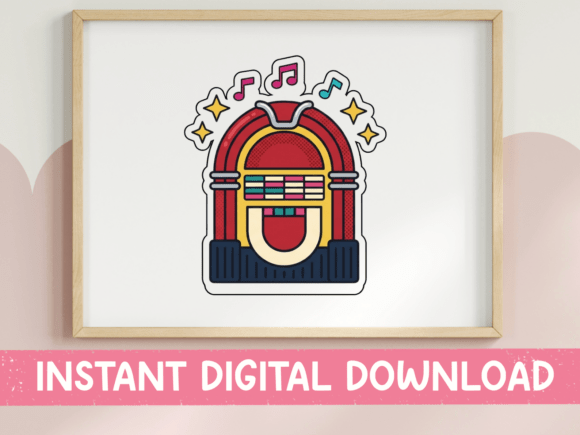
The first impression of the Retro Jukebox Music Sticker is undeniably warm. The description promises a classic arched jukebox glowing in red, gold, and navy with a teal stripe of buttons and a warm yellow center. Visually, this translates into a design that feels like a hug from the 1950s. It creates an immediate mood of joy, nostalgia, and community. Unlike many generic music graphics that rely on flat icons, this design has a distinct personality. It feels like a centerpiece rather than a filler element. For anyone building a brand around retro aesthetics, oldies music, or diner culture, this graphic offers a strong visual hook that customers can instantly recognize and connect with emotionally.
I recently had a specific scenario in mind when evaluating this file: a custom embroidered tote bag for a local coffee shop that specializes in vinyl records and vintage snacks. I imagined stitching the Retro Jukebox Music Sticker onto a canvas tote. The potential here is significant. The color palette of red, gold, and navy is robust enough to stand out against dark fabrics while remaining elegant on lighter backgrounds. However, the real test of any machine embroidery design is how it behaves under the needle, especially regarding detail density and stitch types.
When breaking down the construction of the Retro Jukebox Music Sticker, the layout suggests a mix of satin stitches for the outlines and button details, likely paired with fill stitches for the main body of the jukebox. This combination is generally excellent for creating a raised, tactile finish that adds value to the final product. The arched shape is particularly smart; it naturally draws the eye upward and fits well on curved surfaces like caps or the rounded front of a sweatshirt. If you are an Etsy seller looking to expand your inventory beyond standard t-shirts, this design could be the perfect addition to your list of tote bag designs or sweatshirt embroidery options.
However, practical application requires a critical eye. While the design is vibrant, there are areas where caution is needed. The "teal stripe of buttons" implies small, repetitive elements. In embroidery, small details can sometimes get lost if the thread count is too high or if the fabric texture is too coarse. I would advise testing this on scrap fabric first, specifically checking how the tiny button details hold up on different materials. If you plan to use this on a textured fabric like a heavy wool felt or a loose-weave linen, the fine lines might blur slightly. Conversely, on a smooth cotton twill or denim, the clarity should be sharp and crisp.
One of the most common pitfalls for hobbyists and small business owners alike is ignoring the impact of fabric color on thread contrast. The Retro Jukebox Music Sticker relies heavily on its specific color scheme. On a white or cream background, the red and navy will pop beautifully. But what happens if you try to embroider this on a black cap? The gold and teal might lose their vibrancy depending on the thread weight used. Before committing to a bulk order of merchandise, I strongly recommend comparing light and dark fabric backgrounds using printable mockups. This step saves money and ensures your finished product looks professional, which directly impacts customer trust and buyer engagement.
Let's talk about where this design shines brightest. Beyond the coffee shop tote, the Retro Jukebox Music Sticker is a fantastic candidate for holiday gifts and personalized products. Imagine a set of matching kitchen towels for a grandmother who loves oldies music, or a nursery decor item for a child named "Juke." The design has a whimsical quality that works well for baby embroidery projects, provided the hoop size allows for the necessary spacing. It also fits perfectly into the niche of embroidered patches for jackets or backpacks, adding a touch of flair to everyday wear.
There are, however, scenarios where you should exercise restraint. If you are working with stretchy fabrics like jersey knit without proper stabilizer, the tension required for the fill stitches could cause puckering. Similarly, on very thin fabrics, the density of the design might create holes or weaken the material over time. If you are aiming for a commercial embroidery project that involves frequent washing, such as staff uniforms for a diner, ensure that the design uses high-quality threads and adequate stabilizer to prevent fading or distortion after multiple cycles. The design is best suited for items that do not require extreme flexibility or constant abrasion.
For the creative entrepreneur, the versatility of this digital embroidery file extends to branding. A boutique owner could use the Retro Jukebox Music Sticker as a logo element on hang tags, shopping bags, or even as a subtle accent on a display backdrop at craft fairs. The consistency of the design helps build a cohesive brand identity. When customers see a high-quality, well-stitched version of the jukebox on a product, they perceive higher value in the handmade item. This perception is crucial for justifying price points in the competitive marketplace of craft business and small shop products.
To get the most out of this design, follow these practical steps. First, review the stitch density in your software. If the design feels too dense for your intended fabric, consider reducing the density slightly or adjusting the underlay settings. Second, confirm the hoop size requirements. A design with a large arch needs a larger hoop to accommodate the curve without distorting the edges. Third, inspect the small details closely. Are the buttons distinct, or do they merge into a single blob? If they are too small, you may need to simplify the design manually or choose a different placement area. Finally, check whether the design works for both personal and commercial projects by verifying the license terms. Many designers offer different tiers for personal use versus selling finished goods, so ensuring compliance is vital for protecting your business.
In conclusion, the Retro Jukebox Music Sticker is more than just a pretty picture; it is a functional tool for designers who understand the nuances of thread and fabric. It captures a specific era with charm and style, making it ideal for custom apparel, holiday embroidery, and unique gift ideas. While it requires careful attention to fabric choice and stabilization, the payoff is a finished product that feels authentic and professionally crafted. Whether you are a seasoned pro or a maker just starting your journey, this design has the potential to be a standout asset in your portfolio. Just remember to test, adapt, and always prioritize the quality of the stitch over the speed of production. When done right, the result is a piece of wearable art that truly hits the spot.