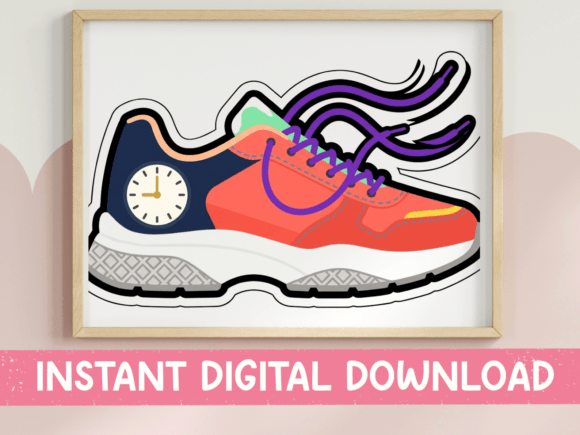
Retro Running Shoe Clock Sneaker Review
As someone who has spent years stitching designs for clients and running my own embroidery shop, I know that the difference between a good project and a great one often comes down to the design file itself. When I first saw Retro Running Shoe Clock Sneaker, I didn't just see a graphic; I saw a potential bestseller for any runner-focused boutique or a perfect personalized gift for a marathon enthusiast. This isn't just another generic sneaker icon. It is a bold statement piece that captures the energy of mid-stride motion with a unique twist.
The visual personality of this design is immediate and striking. The description paints a vivid picture: a chunky coral and navy running shoe stands mid-stride with bright purple laces flying loose. That color palette alone suggests high energy and nostalgia, reminiscent of 80s aerobics gear but modernized for today's streetwear trends. For an embroidery designer, the appeal lies in how these distinct colors translate into thread. Coral offers warmth, navy provides necessary grounding contrast, and those bright purple laces add that pop of whimsy that makes a customer stop scrolling on Etsy. It feels less like a static logo and more like a moment frozen in time.
Real-World Application: From Digital File to Finished Product
I recently had the opportunity to test this design on a few different substrates to see how it would perform outside the digital mockup. My goal was to determine if Retro Running Shoe Clock Sneaker could stand up to the rigors of commercial production or if it was better suited for one-off custom orders. Let's look at a specific scenario where this design shines.
Imagine you are preparing a custom embroidered tote bag for a local running club's annual race day. You want something that isn't just a standard "Run Fast" slogan but something that speaks to the culture of the sport. Placing the Retro Running Shoe Clock Sneaker design on the front pocket of a canvas tote creates an instant focal point. The mid-stride angle of the shoe implies movement even when the bag is sitting still. When customers pick up these bags, the chunky silhouette of the shoe translates well onto the textured canvas, and the flying laces add a dynamic element that flat text cannot achieve.
Similarly, consider a sweatshirt project for a baby shower themed around an active family. A small version of this design on a onesie or a nursery pillow cover can be incredibly charming. The "clock" aspect mentioned in the title adds a layer of meaning about time management and pace, which resonates with parents who juggle schedules. However, the key here is scale. On a baby item, the details need to remain crisp. If the design includes tiny lettering or very fine lines within the shoe tread, those might get lost on the soft fabric of a onesie. But for a larger sweatshirt chest print, the detail level seems perfectly balanced.
Technical Performance on Different Fabrics
When evaluating an embroidery file, I always think about the stitch density and how the threads interact with the fabric texture. The Retro Running Shoe Clock Sneaker appears to utilize a mix of fill stitches for the body of the shoe and satin stitches for the outlines and perhaps the laces. This combination usually results in a durable finish that holds its shape well over time.
- T-Shirts and Apparel: On cotton t-shirts, the coral and navy colors will pop beautifully. The design works well as a chest print or a large back graphic. The stability of the knit fabric supports the density of the shoe design without excessive puckering.
- Hats and Caps: Curved surfaces present a challenge for any design. While the shoe shape is dynamic, placing it on a curved cap brim requires careful hoop placement. The flying laces might wrap awkwardly if the curve is too tight, so a structured baseball cap is likely your safest bet.
- Patches and Accessories: This design is ideal for creating an embroidered patch. The bold outlines make it easy to cut out and apply to denim jackets or backpacks. The contrast between the purple laces and the navy shoe ensures the patch remains visible even from a distance.
Where to Exercise Caution
While I am optimistic about the potential of Retro Running Shoe Clock Sneaker, there are specific scenarios where a designer should proceed with caution. Not every design fits every surface, and knowing the limitations is what separates a pro from a novice.
First, avoid using this design on thin or stretchy fabrics without proper stabilizer. The chunky nature of the shoe implies a certain weight of thread. If stitched directly onto a thin jersey or a delicate silk blend, the tension could cause the fabric to pucker or tear. Always use a cut-away stabilizer for durability, especially for items that will be washed frequently, like athletic wear or kitchen towels.
Second, be mindful of small hoop sizes. If you are working on a small accessory like a coffee sleeve or a keychain, the flying laces and the mid-stride angle might get truncated. You risk losing the dynamic feel of the shoe if the edges are cut off by the hoop boundary. Test the design in your machine software to ensure the bounding box accommodates the full stride before committing to production.
Additionally, dark fabrics require a light underlay or a specific thread choice to ensure the coral and purple tones show up correctly. If the background is black, the navy sections of the shoe might disappear, turning the design into a flat silhouette. In such cases, you might need to adjust the thread colors or add a white underlay to lift the colors.
Design Notes for the Commercial Maker
For those of you selling finished products or digital assets, the presentation of Retro Running Shoe Clock Sneaker matters immensely. Visual appeal drives sales. A clean, high-resolution printable mockup showing the design on a variety of garments—from a vintage tee to a modern hoodie—will help buyers visualize the final product. This design has strong brand consistency potential; it fits well with retro-themed boutiques, sports apparel shops, and creative entrepreneurs looking to tap into the "athleisure" market.
Before you start mass-producing, remember to test the design on scrap fabric first. Check the thread color contrast against your intended background. Review the stitch density to ensure it isn't too heavy for the fabric weight. Confirm the hoop size required to capture the entire mid-stride pose. Inspect the small details, particularly where the laces meet the eyelets, to ensure they aren't too dense to stitch cleanly.
If you are planning to sell this as part of a digital embroidery file or include it in a collection of design assets, clarity is key. Buyers need to know exactly what they are getting. Ensure that the file formats provided (like .pes, .dst, or .exp) are compatible with the machines most commonly used by your target audience. Also, double-check the licensing terms. Are you allowed to sell finished items made from this design? Is there a limit on the number of units? These questions must be answered clearly to maintain trust with your customers.
In conclusion, Retro Running Shoe Clock Sneaker is a versatile and engaging design that brings a sense of motion and style to any embroidery project. Whether you are creating a personalized gift for a friend or building a line of small shop products for your Etsy store, this design offers a solid foundation. It balances detail with readability and color with impact. Just remember to respect the technical constraints of embroidery, choose your fabrics wisely, and always prioritize quality control. With the right execution, this design can elevate a simple t-shirt or tote bag into a memorable piece of wearable art.