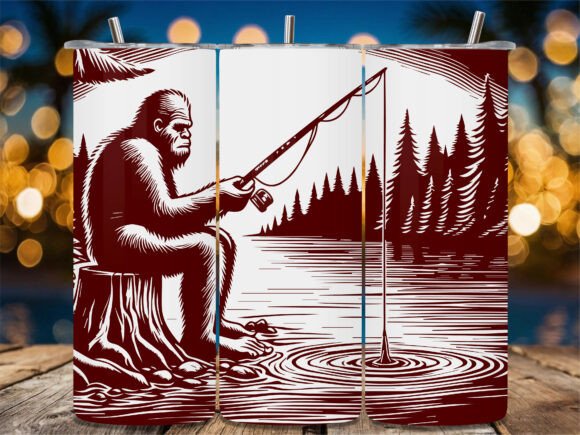
Bigfoot Fishing Lake Scene Tumbler Review
I have spent years reviewing embroidery designs for everything from high-end boutique branding to quick holiday gifts, and I am always skeptical when a product title suggests a mismatch between the medium and the subject. When I first saw the file named Bigfoot Fishing Lake Scene Tumbler, my immediate reaction was caution. The title explicitly mentions "Engraving Laser Tumbler Wrap" and "Stanley-style tumblers," which implies this is a vector file meant for laser engraving on metal or plastic surfaces, not a digital embroidery file for stitching thread into fabric.
However, as a designer who loves a good challenge, I wanted to test the visual concept of this design in a real-world machine embroidery context. Could the artistic elements of a Bigfoot fishing scene translate well onto a tote bag, an apron, or a cap? If we strip away the laser-specific instructions and look purely at the Graphics and Crafts potential of the layout, does it hold up as a viable embroidery project? Here is my honest assessment of how this design would perform if adapted for needle and thread.
The First Impression: Mood and Visual Personality
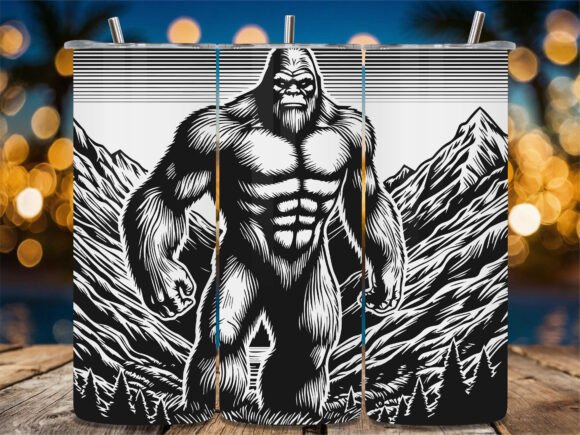
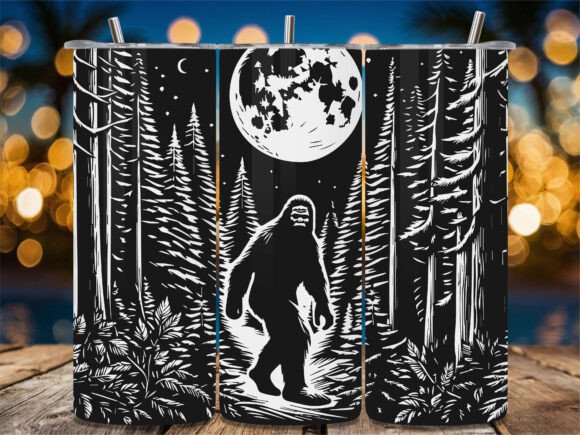
The core appeal of the Bigfoot Fishing Lake Scene Tumbler lies in its whimsical narrative. There is something inherently charming about a cryptid enjoying a quiet afternoon by the lake. In terms of visual personality, the design feels rustic, outdoorsy, and slightly humorous. It taps into the same niche as camping gear, fishing apparel, and nature-themed decor. For a small business owner looking to create unique custom apparel or handmade products, this theme offers a strong conversation starter that generic landscapes do not.
The composition suggests a full-wrap aesthetic, which means the artwork likely spans horizontally across a wide area. This is excellent for large surface areas like the front of a sweatshirt or the body of a canvas tote bag. However, the "wrap" nature requires careful consideration of the hoop size. A design intended to wrap around a 20-ounce tumbler might be too long for standard embroidery hoops unless you are using a multi-needle machine with a large field or planning a split-digitization approach. The mood is perfect for holiday embroidery gifts or boutique branding for outdoor enthusiasts, but the scale must be managed correctly.
Real-Life Application: From Digital File to Finished Product
Let's imagine a scenario where I take this design concept and adapt it for a client order. The client wants a set of matching kitchen towels for a cabin retreat gift. The Bigfoot Fishing Lake Scene Tumbler concept fits beautifully here. Imagine a heavy-duty cotton tea towel featuring the Bigfoot character holding a rod, perhaps with a fish jumping out of the water below. The stitch density would need to be adjusted significantly compared to a laser engraving file, which relies on line weight rather than thread thickness.
If I were to use this for a small shop product like a baby onesie, the design would need to be scaled down. The original "full-wrap" aspect might overwhelm a small garment, turning a cute detail into a chaotic mess. Instead, I would isolate the central figure—the Bigfoot—and place it on the chest of a sweatshirt or the center of a bib. The result would be a personalized gift that feels cohesive and professional. Customers browsing an Etsy listing for "outdoor themed gifts" would likely stop scrolling because the character is distinct and the story is clear without needing text.
For commercial embroidery projects, such as creating merchandise for a local fishing lodge, this design has high recognition value. It is specific enough to stand out but broad enough to appeal to anyone who enjoys the outdoors. The key is ensuring the thread colors contrast sharply against the fabric. A dark forest green background with light tan stitching would make the details pop, whereas a busy patterned fabric would hide the intricate work entirely.
Where to Use Carefully: Limitations and Risks
While the concept is strong, there are several areas where this design could fail if applied without technical adjustments. First, the curved surfaces mentioned in the original description (like a tumbler) present a major hurdle for flat embroidery. Embroidering a "wrap-around" image onto a curved hat or a rounded pillow can distort the perspective, making the Bigfoot look stretched or squashed. You must plan for the curvature of the final item before digitizing.
Another critical factor is the fabric texture. If you attempt to stitch this detailed scene onto a thin, stretchy jersey knit without proper stabilizer, the tension will cause puckering, ruining the sharp lines of the lake and trees. Similarly, on textured fabrics like denim or fleece, the fine details of the fishing rod or the fur on the creature might get lost in the weave. In these cases, a simpler, bolder design would yield better results.
We also need to consider the stitch density. Laser files often rely on solid black fills or fine lines. In embroidery, dense fill stitches can become stiff and bulky. If the original design includes large areas of solid color, converting them directly to fill stitch without underlay or density reduction could make the fabric feel like cardboard. This is particularly problematic for apparel decorators working on lightweight shirts where comfort is paramount. Additionally, tiny lettering or small decorative accents might not survive the washing process if they are too small to be stitched securely.
Practical Designer Notes for Execution
Before you commit this design to your production line, there are essential steps to ensure success. Always test the design on scrap fabric first. This allows you to see how the satins and running stitches interact with your chosen material. Check the thread color contrast by laying out your spools next to the mockup; sometimes a color looks great on screen but disappears in person.
You must review the stitch density carefully. If the design feels too heavy, reduce the fill percentage or switch to a lighter stitch type. Confirm the hoop size matches your intended project dimensions. If the design is too wide for your hoop, you may need to digitize it in sections and join them later, though this adds complexity. Inspect small details like the eyes of the Bigfoot or the hooks of the fishing pole; if they are too small, they may require simplification to remain visible after stitching.
It is also wise to test the design in black and white mockups. This helps verify that the composition works based on value alone, independent of color. Compare how it looks on both light and dark fabric backgrounds to ensure versatility. Finally, confirm whether the file comes with the necessary digital embroidery file formats (like .DST, .PES, .EXP) or if it is strictly a vector graphic for laser cutting. If it is a laser file, you will need to trace and re-digitize the shapes specifically for embroidery, paying close attention to the direction of the satin stitch to follow the contours of the image naturally.
Final Verdict on Value and Appeal
The Bigfoot Fishing Lake Scene Tumbler offers a unique blend of humor and nostalgia that can elevate a craft business or a personal embroidery project. While the original specification targets laser engraving, the artistic concept is robust enough to be adapted for textiles with the right technical approach. It creates a sense of fun and adventure that customers love, increasing the perceived value of the finished product.
However, success depends entirely on the execution. Do not simply copy-paste a laser file into an embroidery machine. Treat it as a source of inspiration, digitize it with the nuances of thread in mind, and choose the right materials. When done correctly, this design can transform a simple tote bag or apron into a memorable piece of art that tells a story. For designers willing to put in the extra legwork to adapt the format, the payoff in customer satisfaction and brand identity is well worth the effort.